
CS · Penn State · graduating Dec 2026 prev. Northrop Grumman, B. Braun Medical
I build AI that does real work.
Last year I built a computer-vision system that inspects vials and syringes for an IV compounder before they reach a patient, catching label and fill errors before a pharmacist has to.
I'm looking for software and firmware engineering roles starting early 2027, especially anywhere AI is breaking new ground.
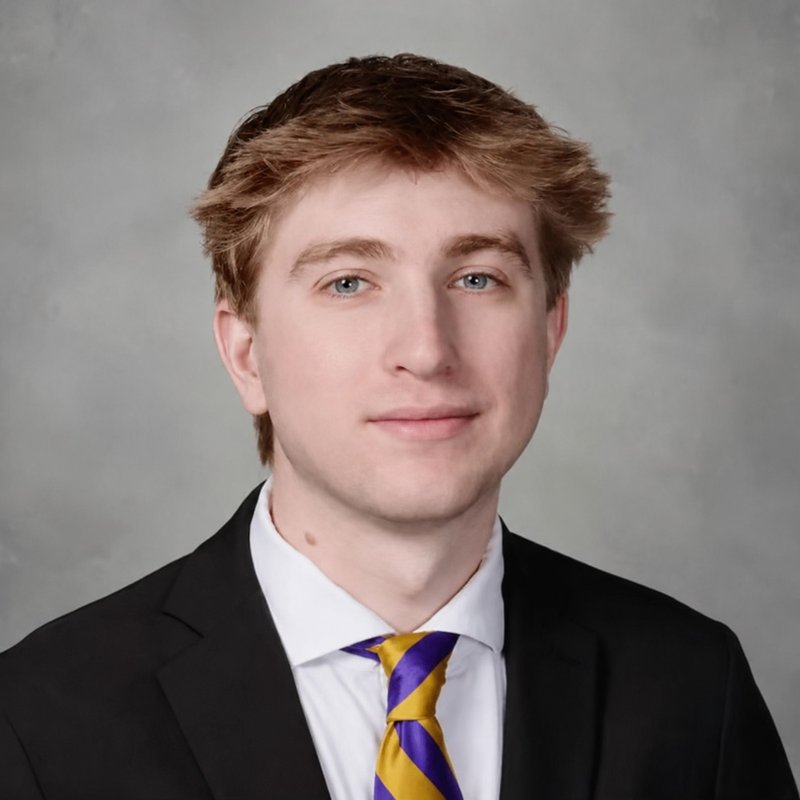
Your photo goes hereSave a headshot as me.jpg next to this file
I'm a CS student at Penn State, graduating December 2026, and I'm hooked on the exact moment an AI model stops being an experiment and starts changing something real. At B. Braun, that moment was watching my vision system flag a mislabeled vial that a person had missed — software quietly standing between a mistake and a patient. That's what pulls me toward computer vision and applied machine learning, from that system to building the training data behind AI coding tools at Handshake AI. I've also got a serious interest in computer engineering. My summer at Northrop Grumman writing C++ for FPGA-based hardware pushed me past CS into embedded systems, and gave me a better feel for how software has to behave inside a physical product.
I'm a self-driven learner, always eager to pick up something new: a new corner of AI, a language I haven't touched, or a problem I don't yet know how to solve. Lately that has meant working through the math and algorithms behind ray tracing by writing a Monte Carlo path tracer in C++ from scratch, and getting a feel for how neural networks behave by building one in Python to train a car to drive itself. I'm just as passionate about training my own brain as I am about training a neural network.
what I've built
AI, put to work
computer vision · in production

BB
Medical Vision Inspection
B. Braun Medical — the project I'm most proud of
Patent pending — named inventor
I built a real-time vision system that inspects medical vials and syringes, catching errors in NDC codes, expiration dates, lot numbers, and fill volumes. I designed and trained custom ResNet and YOLO models and paired them with EasyOCR to read each label. It's part of a larger inspection system that has a patent pending with my name on it.
PyTorchYOLOResNetEasyOCRPHP
real-time
defect detection
multi-site
used on the floor
NDC0264·9876
EXP2027·04
LOTA1B2C3
VOL4.2 mL · low
other AI work
Neural Car
neural net + genetic algorithm, from scratch in numpy
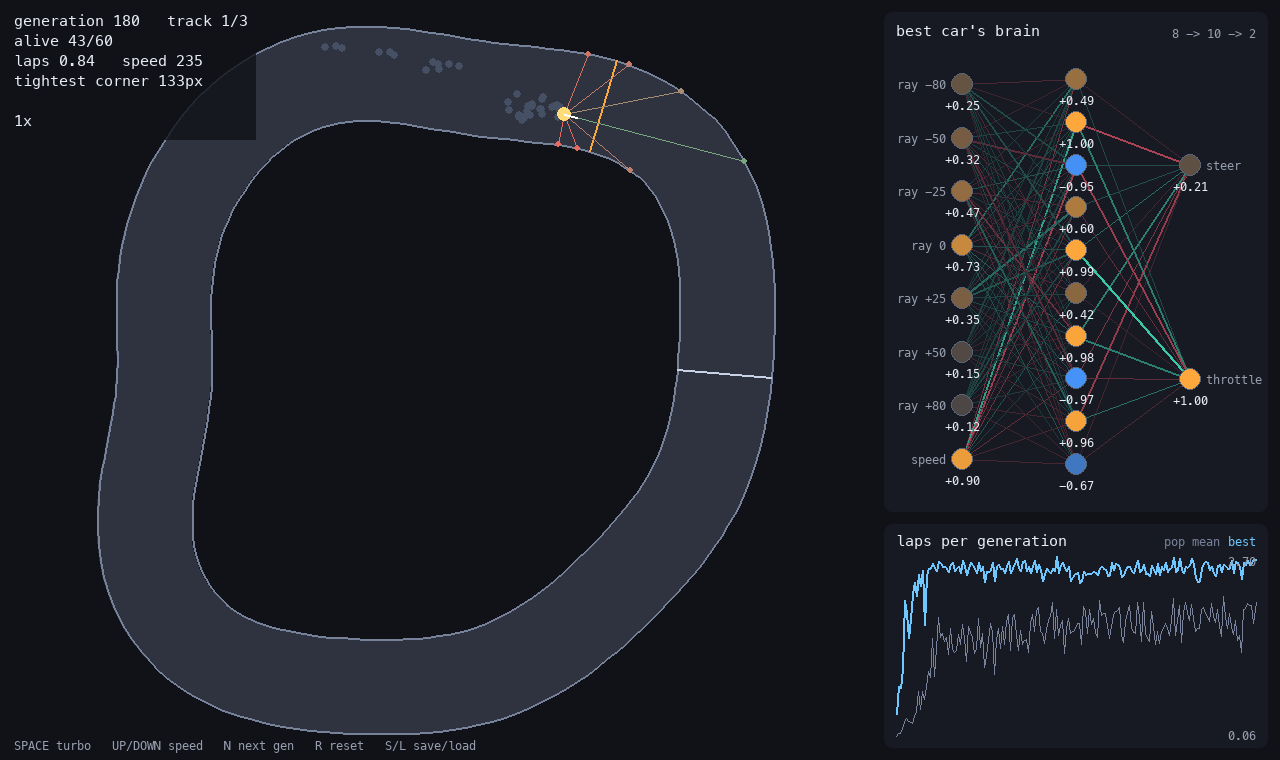
A car that teaches itself to drive randomly generated tracks. Both the network and the genetic algorithm are written from scratch — no PyTorch, no autograd, no optimizer.
Seven distance rays plus the car's own speed feed 8 inputs through 10 tanh units to steering and throttle
Learns by evolution rather than gradients: tournament selection, uniform crossover, 15% gaussian mutation, and elitism so a good generation can't be lost to bad dice
Building benchmark datasets used to test AI coding models, by turning real GitHub PRs into "golden solution" tasks that AI agents attempt to reproduce.
Shipped full task pipelines across Go, Python, and Rust repos: temporal, karmada, streamlit, transformers, lerobot, and more
Enforced a strict 3-commit structure (fix / tests / metadata) so agents have a clean, verifiable target
Wrote problem statements and hints calibrated to test reasoning without leaking the implementation
DockerGitPythonGoRust
also built
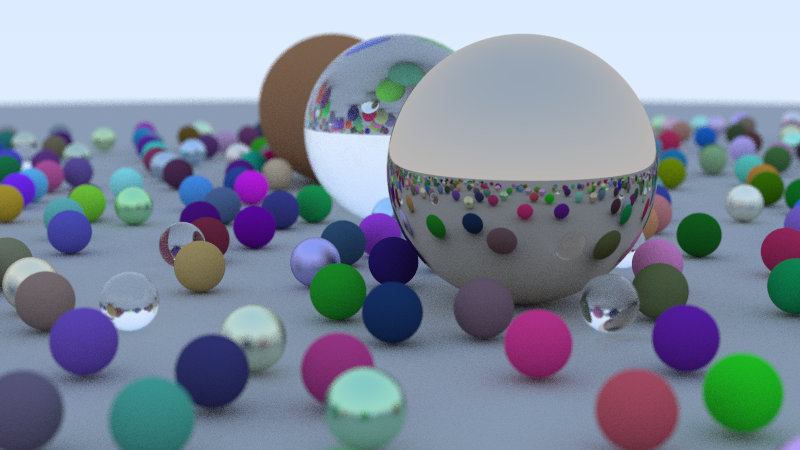
Monte Carlo Path Tracer
C++17, written from scratch, no engine
in progress · real-time direct lighting shipped, GPU port next
A multithreaded CPU path tracer rendering diffuse, metal, and glass spheres with physically based global illumination, now resampling its direct lighting so scenes full of small lights stay quiet.
Monte Carlo integration: each pixel averages N independently sampled ray paths, each bounce a sample of the rendering equation
Lambertian, metal, and dielectric materials, with Snell's law and Schlick's approximation for glass
ReSTIR-style direct lighting, built up in stages: next-event estimation, then RIS with weighted reservoir sampling, then spatial reuse of neighbouring pixels' reservoirs
Reuse is rejected across a normal or depth discontinuity, so a pixel never borrows a light sample from the other side of a silhouette
1.96× lower MSE than uniform-pick NEE at equal sample count on a 32-light scene, and the gap widens as lights are added
BVH acceleration: 6.24× faster than linear scan on a 487-sphere render, plus benchmark sweeps that regenerate every chart and table from one command
Wrote and debugged low-level C++ for system software that talks to FPGA-based hardware, on an Agile team with sprint planning, standups, and peer reviews.
C++FPGAEmbedded SystemsAgileGit
May 2025 — May 2026
BB
B. Braun Medical
Software Engineer Intern
Allentown, PA
Built the medical-vision inspection system above, training custom ResNet and YOLO models with EasyOCR for real-time defect detection, and rebuilt a legacy C# label app into a web platform that cut setup from roughly ten minutes to seconds across facilities. This is the work that made me want to do AI for a living.
PyTorchYOLOResNetEasyOCRComputer VisionC#PHP
Jun 2024 — present
HS
Handshake AI
AI Trainer — Coding & Software
Remote
Working across multiple coding/software-focused AI training projects, evaluating and building data that sharpens how AI models reason about real codebases. Project Helix, my collaboration with Anthropic, is one example: building benchmark datasets out of real GitHub PRs to test AI coding models.
PythonGoRustDockerGit
where I'm learning
Education
Aug 2023 — Dec 2026
PSU
Penn State University
Bachelor of Science: Computer Science, Expected 12/2026
University Park, PA
My coursework runs wider than the CS core, and the three minors say it best. Computer Engineering took me into computer architecture and embedded systems. Cybersecurity taught me how systems get attacked and how to defend them. Engineering Leadership Development gave me the project management and leadership skills it takes to be a successful engineer.
A 5-stage pipelined CPU in Verilog with Xilinx Vivado.
Hazard detection + forwarding logic
Validated with custom assembly programs
Waveform-verified in Vivado
VerilogVivadoAssembly
TEE FINDER
Tee Finder
ENGR 407 startup challenge — team of 5
An app that pairs everyday golfers with the right partners and books tee times for them, with an AI layer that can book a tee time straight from a prompt.
Built for my Engineering Leadership Development minor's startup challenge
Pitched a course-licensed model: free for golfers, paid by the course
Filtered search across price, partners, times, and courses, plus AI-driven matchmaking
I'm graduating December 2026 and looking for software and firmware engineering roles, especially anywhere AI is breaking new ground. Or just reach out to talk shop. I'm always up for it.